
Narratives, Power, and the Right to Tell Your Own Story: Inside a HATE-LESS Youth Media Lab in Cyprus
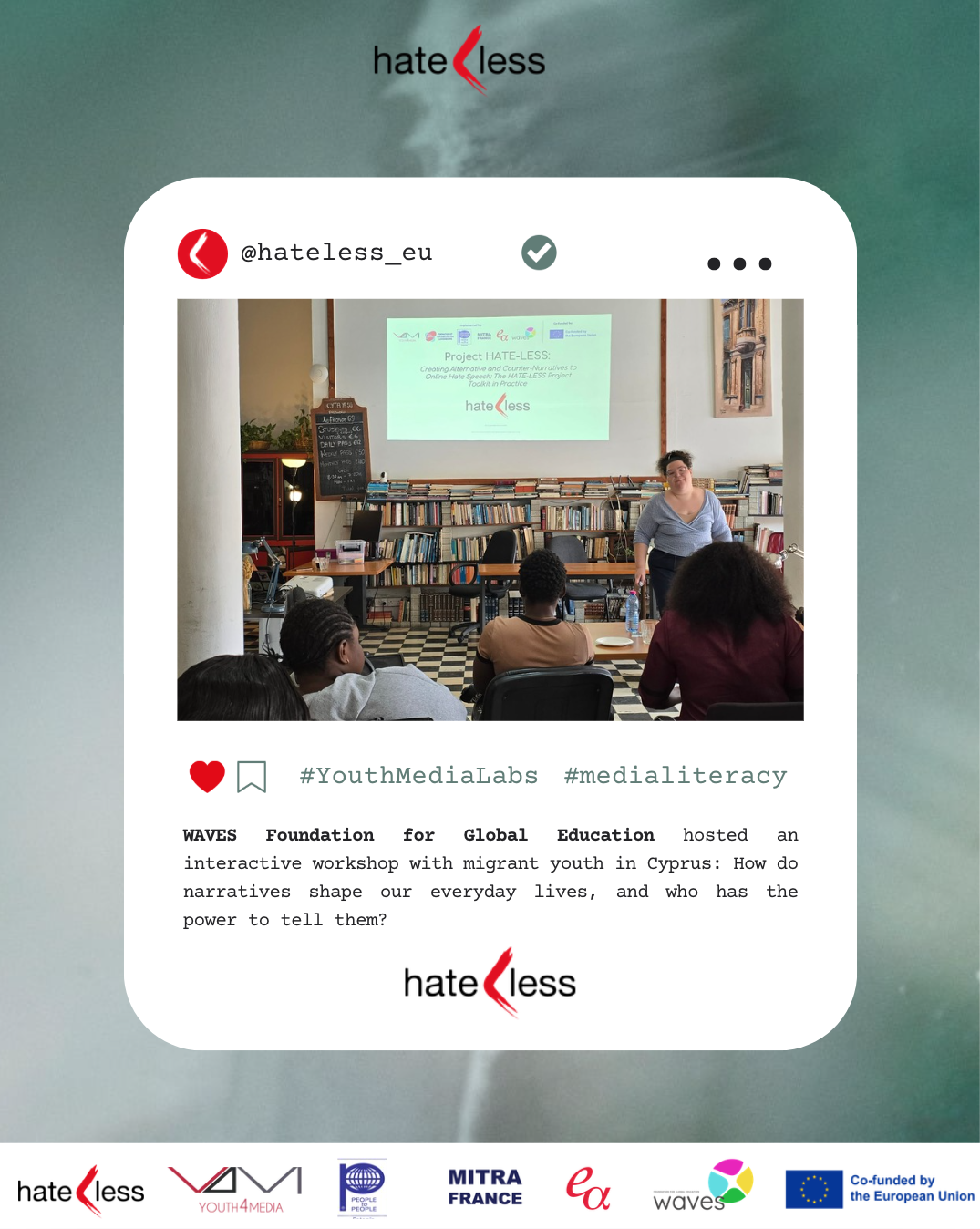
As part of the HATE-LESS project, WAVES Foundation for Global Education hosted a workshop with young people in Cyprus exploring how hate speech, narratives, and power intersect – and why counter-narratives matter.
Every day, young people in Cyprus – like young people everywhere – encounter a constant stream of stories about who belongs, who doesn’t, who deserves to be heard, and who can safely be ignored. Most of those stories arrive without warning, embedded in news headlines, social media posts, casual conversations, and the strategic silences in between.
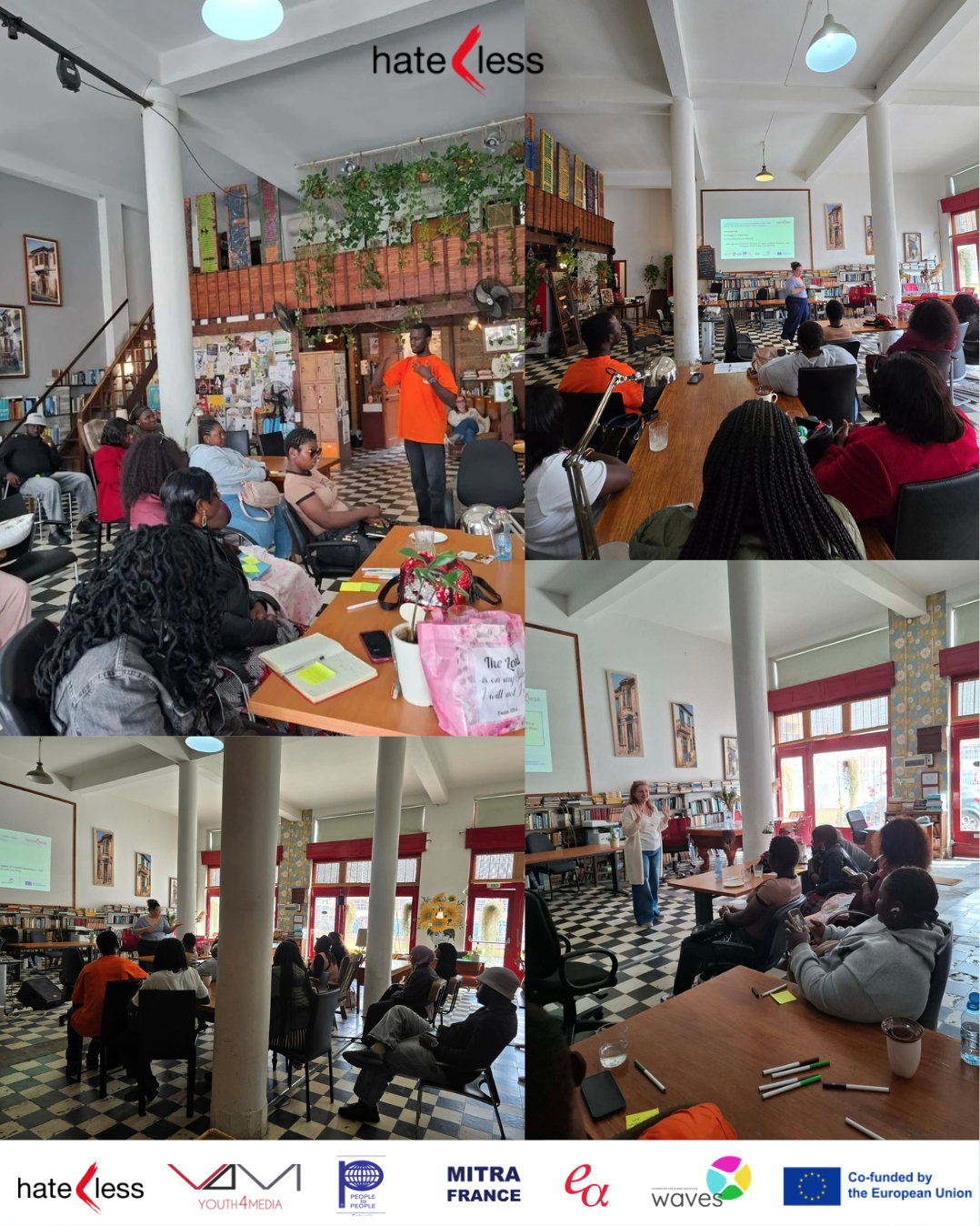
As part of our ongoing HATE-LESS Youth Media Laboratories, WAVES Foundation for Global Education recently brought together a group of migrant youth for an intensive workshop dedicated to unpacking exactly this: how narratives are built, how they shape everyday life, and what young people can do to push back when those stories turn harmful.
Starting with the basics: What is hate speech?
The workshop opened with a guided exploration of what hate speech is, and just as importantly, what it is not. Participants discussed the boundaries between offensive speech, controversial opinion, and speech that actively incites discrimination or violence against particular groups. They examined how hate speech can appear in obvious forms, but also in much more subtle ways: through casual jokes, through repeated stereotypes, and through what is implied rather than said outright.
Understanding narratives and how they shape us
From there, the session moved into one of the most important concepts in media literacy: the idea of a narrative. A narrative is not just a single story, but a repeating pattern, a specific way of framing reality that gets repeated until it starts to feel like common sense. Participants examined how narratives about specific groups, including migrants and minorities, are constructed and circulated, and how they end up shaping public perception and policy long before an individual is ever met as a person.
Talking honestly about power
A central focus of the workshop was the recognition that narratives are never neutral. They are shaped by power; by who owns the media, who controls the platforms, who has the access to speak, and whose voices are automatically treated as authoritative. Groups who do not have equal access to representation are often described from the outside rather than allowed to describe themselves. This dynamic, the workshop emphasized, has real consequences for how communities are perceived, treated, and ultimately supported.
Counter-narratives: Telling your own story as an act of resistance
The workshop closed by turning to the concept of counter-narratives. A counter-narrative is not simply a contradiction of a dominant story; it is the active assertion of a different one, one firmly rooted in lived experience and told on one’s own terms. Participants discussed why counter-narratives matter, why they can be challenging to produce, and why every young person sharing their own perspective contributes to a more honest, diverse, and pluralistic media landscape.
Grounded in the HATE-LESS toolkit
Throughout the session, facilitators drew directly on the activities, exercises, and tools developed within the HATE-LESS toolkit. This resource was produced by the project partnership and designed specifically to support youth workers in delivering participatory, accessible, and rigorous media literacy education across Europe.
What comes next
This workshop is just one step in a much broader journey. The young people taking part in our Youth Media Laboratories in Cyprus will carry these reflections directly into the next phase of the project: the co-creation of participatory videos that respond to the narratives they have chosen to question.
We look forward to sharing updates on each lab and showcasing their video productions in the weeks ahead.
Funding Agency: JUGEND für Europa
Learn more about HATE-LESS: https://hate-less.eu