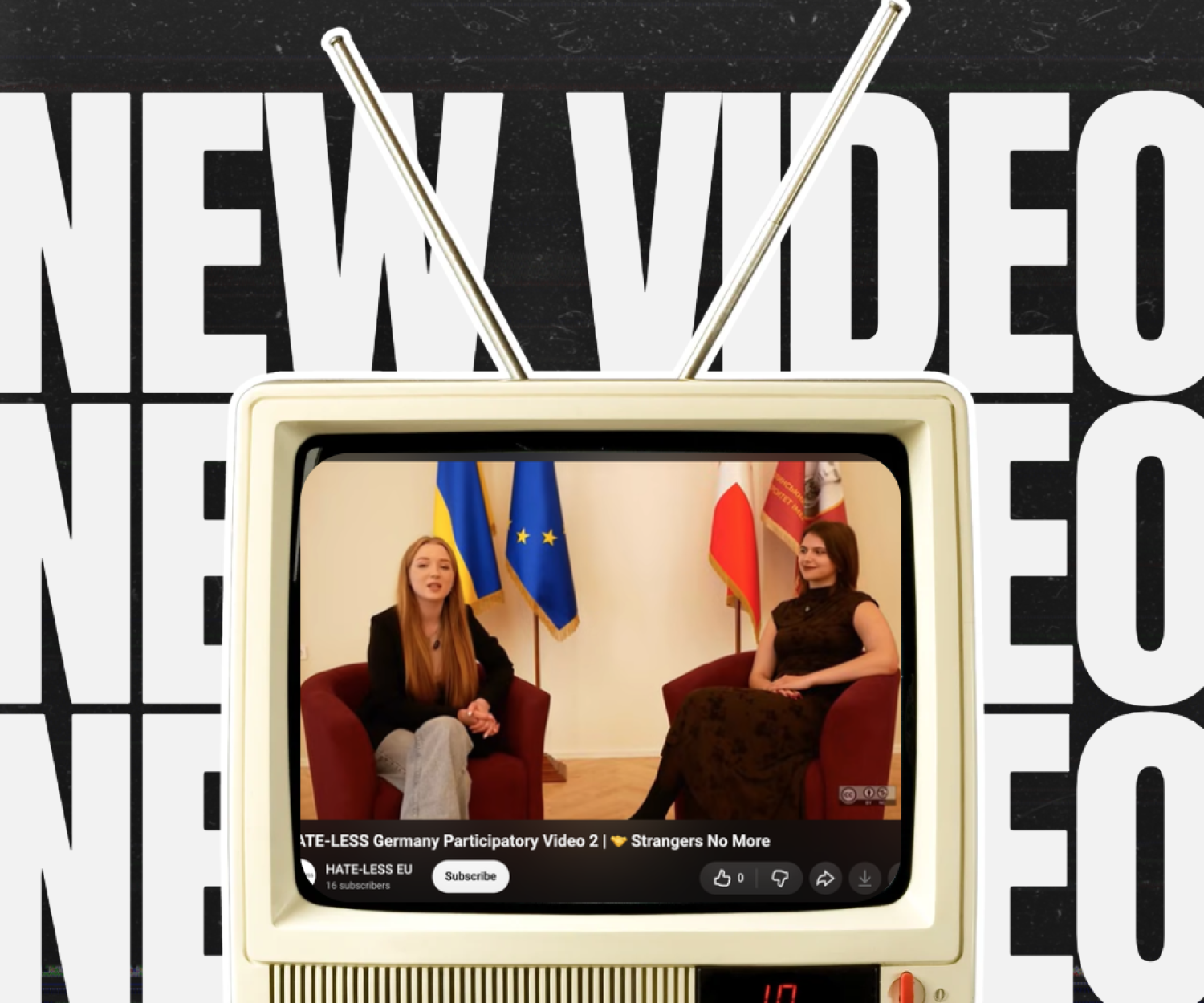
Empowering Ukrainian Youth: HATE-LESS Featured by NSJU!

Media Literacy and Technology Against Hate Speech: HATE-LESS Toolkit Launches in Ukraine


We are incredibly proud to announce that the HATE-LESS Toolkit has gained significant recognition by the National Union of Journalists of Ukraine (NSJU). Their recent feature highlights that our toolkit “Media Literacy and Technology Against Hate Speech: A Guide to Developing Youth Inclusion” is available in Ukrainian, making these resources accessible to Ukrainian educators, journalists, and youth leaders.


Giving Youth The Tools to Tell Their Own Stories

The core philosophy of the HATE-LESS project is empowerment. As highlighted by the NSJU, the toolkit focuses on helping young people develop counter-narratives that break down stereotypes. In a digital environment where young people are frequently exposed to harmful content, stereotypes, and misleading information, providing them with the technical and ethical skills to tell their own stories is more than media education – it is a way to strengthen confidence, inclusion, and community resilience.

It also encourages them to express their experiences, perspectives, and ideas in their own words.


A Comprehensive 6-Module Journey

The manual, adapted into Ukrainian by Yevhen Tsymbalenko under the guidance of media expert Wolfgang Ressmann, offers a practical path from theory to action through six structured modules:

  1. Ethical Foundation: Learning how to create a safe space for discussing sensitive and complex topics.
  2. Emotional Algorithms: An analysis of how social networks manipulate feelings and influence behavior.
  3. Research Methods: Practical exercises ranging from creating audio diaries to the “Photovoice” method.
  4. Participatory Action: Making one’s own voice heard for positive change and co-creating community ethics.
  5. Technical Workshop: Expert tips on creating quality videos, conducting interviews, and content promotion.
  6. Reflection: Interactive games and exercises are designed to consolidate new skills and lessons.


Why This Matters Now

The manual is based on the combined experiences of six countries (Germany, Estonia, France, Spain, and Cyprus), with each section adapted to allow trainers to adjust exercises to local needs, now also available for Ukrainian audiences. We are honored to contribute a tool that helps build inclusive, technological, and participatory approaches in youth work.


We invite all educators, youth leaders, and media professionals to explore the Ukrainian version of the toolkit and join us in building a more inclusive and resilient digital world.


Read the full NSJU article: bit.ly/HATE-LESSUkranian

Download the Toolkit in Ukrainian: https://bit.ly/4tPFAve


Funding Agency: JUGEND für Europa

Learn more about HATE-LESS: https://hate-less.eu

HATE-LESS Train the Trainer Spain (1/4)

How does a place shape a story?

From city streets to personal spaces and digital environments, the contexts in which we live and interact influence how narratives are created, shared, and understood. Recognizing this, Evolutionary Archetypes Consulting SL (EAC) is hosting the first session of the HATE-LESS.EU Train the Trainer series, focusing on Storytelling Through Space.


📅 7 May 2026

⏰ 17:00–18:30 CET

📍 Online (Zoom) – Join here: https://bit.ly/4cRhx88 

👉 Sign up: https://forms.gle/wQZh4MoapccwZt6f8 

🌍 SALTO Application: http://trainings.salto-youth.net/14786 


From Environment to Narrative

This interactive online workshop is part of achieving our goal of equipping youth workers and educators with tools to address hate speech and disinformation through media literacy and participatory approaches.

The session explores how environments – physical and digital – shape meaning in storytelling, and how young people can use their surroundings to express their perspectives and challenge harmful narratives.

Through hands-on, non-formal learning methods, participants will learn how to guide youth in transforming everyday spaces into powerful storytelling tools.


What Participants Will Learn

During the training, participants will:

  • Gain practical experience with participatory video methods
  • Explore how space and context influence storytelling
  • Develop skills in visual framing and narrative construction
  • Learn how to support youth in creating counter-narratives to hate speech and disinformation
  • Walk away with a ready-to-use activity for their own training contexts
  • Connect with a European network of trainers and youth workers


What You’ll Need

To fully engage in the session, participants are encouraged to prepare:

  • A laptop (recommended for participation)
  • Access to AI tools (e.g., ChatGPT)
  • A video recording device (phone, laptop, or camera)
  • Optional: tripod, ring light, or video editing tools


Why This Training Matters

In today’s digital landscape, young people are constantly exposed to narratives shaped by social media, algorithms, and visual culture. Developing the ability to critically engage with these narratives and to create their own is essential.

The HATE-LESS Train the Trainer series in Spain supports youth workers in moving beyond awareness, enabling young people to actively participate in shaping inclusive, diverse, and empathetic narratives through media.

By focusing on participatory video and storytelling, this training contributes to a broader goal: empowering youth to challenge hate speech, express their identities, and contribute to more resilient communities.


Join the Training

Be part of this interactive learning experience and explore how storytelling can become a tool for social impact.

👉 https://bit.ly/4cRhx88 

Funding Agency: JUGEND für Europa

Learn more about HATE-LESS: https://hate-less.eu

Building a critical mass of youth workers against hate speech and disinformation – one workshop at a time.

Change Compounds: Training the Trainers to Tackle Hate Speech in Cyprus


The “cascade model” is a way to ensure that the seeds of media literacy planted today grow into a forest of critical thinkers tomorrow.


On 20 February 2026, the Cyprus edition of the HATE-LESS Youth Worker Cascade Training officially kicked off. Hosted by the WAVES Foundation for Global Education, this 5-hour intensive workshop brought together 15 dedicated youth workers and educators from across the island to confront one of Europe’s most toxic challenges: the weaponization of disinformation and hate speech.


Why Youth Workers?


In the digital age, youth workers are often the first responders. They are the ones young people turn to when they encounter confusing narratives, racist tropes, or targeted disinformation online. Our goal with HATE-LESS is to ensure these professionals don’t just have an answer, but a methodology.


By providing tools to deconstruct these harmful narratives, we empower educators to transform a moment of conflict into a pedagogical opportunity.


Inside the Workshop


The energy in the room was a testament to the local appetite for these tools. During the session, our participants:


  • Dived into the Toolkit: Engaged with the methodological guidelines developed by the HATE-LESS partnership.
  • Lights, Camera, Action: Familiarized themselves with participatory video, a powerful pedagogical approach that allows young people to take the mic (and the lens).
  • Hands-on Testing: Worked through practical activities designed to strip away the layers of disinformation and racist rhetoric.
  • Contextual Adaptation: Reflected on how to bring these global methodologies back to their specific local youth groups.


The Power of the Cascade


What we saw in Cyprus is a signal that the cascade model is working. Media literacy is no longer a “niche” skill; it is recognized as a core competence for modern youth work.

Every single participant expressed a desire to stay connected, proving that when you provide high-quality, actionable resources, the community is ready to catch the fire.


What’s Next?


This workshop was just Phase One. A selection of these newly trained youth workers will now move into the Youth Laboratories. Here, the roles shift: the trainers become facilitators, and young people step into the spotlight to conduct their own research and produce participatory videos on the issues that matter to them.


Real change happens when we empower educators with the right tools and then give young people the space and trust to tell their own stories.


Funding Agency: JUGEND für Europa

Learn more about HATE-LESS: https://hate-less.eu

Defending Truth in the Digital Age

Highlights from Wolfgang Ressmann’s Latest TV Talk


In a world increasingly shaped by “hybrid warfare” and polarized narratives, how do we protect the truth? 

Our Consortium Leader, Wolfgang Ressmann (EUROPEAN YOUTH4MEDIA NETWORK EV), recently sat down for an in-depth interview with CIVIL Media to discuss the urgent intersection of media literacy, democratic resilience, and the mission of the HATE-LESS project.


The discussion, conducted between Berlin (Germany) and Skopje (Macedonia), captured a critical moment for Europe’s media landscape. Wolfgang spoke with Xhabir Deralla about the evolving threats of disinformation and how narratives are being weaponized to undermine social cohesion.


The Fight for Truth


During the interview, Wolfgang highlighted that hate speech and disinformation are not merely “online noise, but strategic tools used to destabilize societies. From the Western Balkans to the heart of Europe, the HATE-LESS project stands as a shield against these hybrid threats by empowering the most vulnerable: our youth.


Empowerment Through the HATE-LESS Toolkit

A key takeaway from the talk was that the true adversary isn’t just the hateful voice, but the lack of media literacy. Wolfgang emphasized that our project provides the necessary “critical lens” through its specialized modules. The HATE-LESS Toolkit was presented as a vital resource for:

  • Deconstructing Narratives: Understanding how racist and anti-migrant rhetoric is built so that it can be effectively dismantled.
  • Media Literacy: Equipping young people with the skills to identify manipulation and verify information in real-time.
  • Creating Counter-Narratives: Shifting the focus from passive “fact-checking” to the active creation of positive, inclusive stories that reflect the true diversity of Europe.


A Positive Future for Democratic Resilience 

The tone of the conversation was one of urgent optimism. Wolfgang made it clear that standing with projects like HATE-LESS is an investment in Europe’s democratic future. By providing young creators with the tools to speak up safely and intelligently, we are building a digital environment where empathy and facts defeat fear and hate.


Watch the full interview on CIVIL Media here: https://youtu.be/J5hEpRajKiU


Funding Agency: JUGEND für Europa

Learn more about HATE-LESS: https://hate-less.eu

How participatory action leads to less hate speech. – Activity 2 from Toolkit

The Science of Walking the Talk: How Participation Dissolves Hate


Can a simple 40-minute walk change the way we handle hate speech? It sounds like a bold claim, but the science behind the HATE-LESS hypothesis suggests that the answer is a resounding yes.


At the core of our project is a powerful idea: Participatory action leads to greater empathy. But what does that actually look like in practice? In our latest toolkit update, we dive into Activity 2: The Walking-Talking Activity, a method that moves learning out of the classroom and into the real world.


Why “Participatory Action” Works


Traditional education often asks us to sit and listen. Participatory action asks us to act. When we engage in activities like walking and talking in nature, we aren’t just discussing a problem; we are physically and emotionally shifting our perspective.


Science shows that movement combined with storytelling lowers our natural defensive barriers. By stepping out of a formal setting and into a park or forest, participants enter a “safe container” where trust can grow.


The Power of the Walking-Talking Activity


This isn’t just a stroll; it’s a structured exercise in deep empathy. Here’s how it works:

  • The Silent Listen: One person shares their experience with hate speech for 10 minutes while the other listens in complete silence. No interruptions, no judgment.
  • The Shared Story: Roles are reversed, giving both peers the rare opportunity to be truly heard.
  • Co-Analysis: The final 10 minutes are dedicated to giving advice and finding solutions together.


From Stories to Solutions

When participants “walk the talk,” they develop more than just skills; they build social resilience. By the end of the 40 minutes, the results are clear: 

  • Deeper Empathy: It is hard to hold onto bias when you have spent 10 minutes silently holding space for someone’s personal story. 
  • Peer Feedback: Solving problems together turns victims into survivors and bystanders into allies. 
  • Open-Mindedness: Hearing different experiences in a confidential environment breaks the isolation that hate speech tries to create.


Join the Movement


We believe that when we share our stories in a safe space, hate speech loses its power. That is why we are giving them the tools to actively dismantle it through connection.


Ready to try this with your group? You can find the full “Walking-Talking” guide and more science-backed activities in the HATE-LESS Toolkit: https://hate-less.eu/wp-content/uploads/2026/03/Hateless-Toolkit.pdf 


Funding Agency: JUGEND für Europa

Learn more about HATE-LESS: https://hate-less.eu

Activity 1 from toolkit

Stop Policing, Start Participating: Why Co-Creating a Code of Conduct Is the Antidote to Hate Speech

A Featured Activity from the HATE-LESS Toolkit


In traditional education or youth work settings, rules are often established top-down. We are handed a list of “Do’s” and “Don’ts,” and our role is simply to follow them. While this might maintain temporary order, it rarely builds a deep sense of responsibility. If we want to genuinely address and prevent hate speech, we have to flip the script.


Hate speech often grows in environments where individuals feel unheard, disconnected, or excluded. This week, we are highlighting a core activity from the HATE-LESS Toolkit that directly targets these root causes. It’s called Activity 1: “Our Values, Our Voice.”


The Problem with Policing Behavior


When we impose rules, we place the responsibility for maintaining order solely on the authority figure. The participants (students, youth, group members) remain passive. If that authority figure isn’t looking, the rules can easily be broken. In this model, discipline often depends on a system of surveillance and punishment. This approach may stop a behavior temporarily, but it doesn’t change the underlying culture.


The Power of Participation: Co-Creation


The “Our Values, Our Voice” activity transforms group dynamics by placing ownership directly in the hands of the participants. It recognizes that responsibility cannot be forced.


Here is why this approach, taken from Module 1 of our methodology, is so powerful:


  1. Starts with Individual Values: The activity begins not with a rule, but with a question: “What makes a group feel safe, fair, and respectful for you?” This allows every individual to reflect on their personal needs and voice them, grounding the collective rules in personal reality.
  2. Nurtures Multidisciplinary Thinking: It combines social psychology (individual values), organizational design (group statutes), and civic engagement (symbolic affirmation) to create a robust system of shared behavior.
  3. Creates a “Shared Covenant”: The final Code of Conduct is not a list of prohibitions. It is an agreement, a promise that everyone in the room has made to each other. When everyone “signs” the document (whether digitally or on a physical poster), they aren’t just agreeing to follow rules; they are committing to a specific way of treating their community members.
  4. Agency Displaces Aggression: The feeling of agency (that one’s voice matters and has an impact on the environment) is a critical factor in social psychology. When young people have agency in defining their boundaries, they are far less likely to resort to aggression or hate to assert control.


HATE-LESS: Creating Resilient Communities


At its core, this activity is about building Resilient, Hate-Free Spaces. By investing an hour in co-creating a Code of Conduct, group leaders are making a long-term investment in prevention. They are ensuring that dignity, not discipline, is the foundation of the group.


We encourage all educators, youth workers, and team leaders to try this activity. See for yourself how a shared commitment can transform a group culture from the inside out.


📖 Ready to build ownership in your group? Download the full activity description and the HATE-LESS Toolkit for free here: https://tinyurl.com/muc7xckn 


Extra material: European Commission, The Code of conduct on countering illegal hate speech online +


Funding Agency: JUGEND für Europa

Learn more about HATE-LESS: https://hate-less.eu

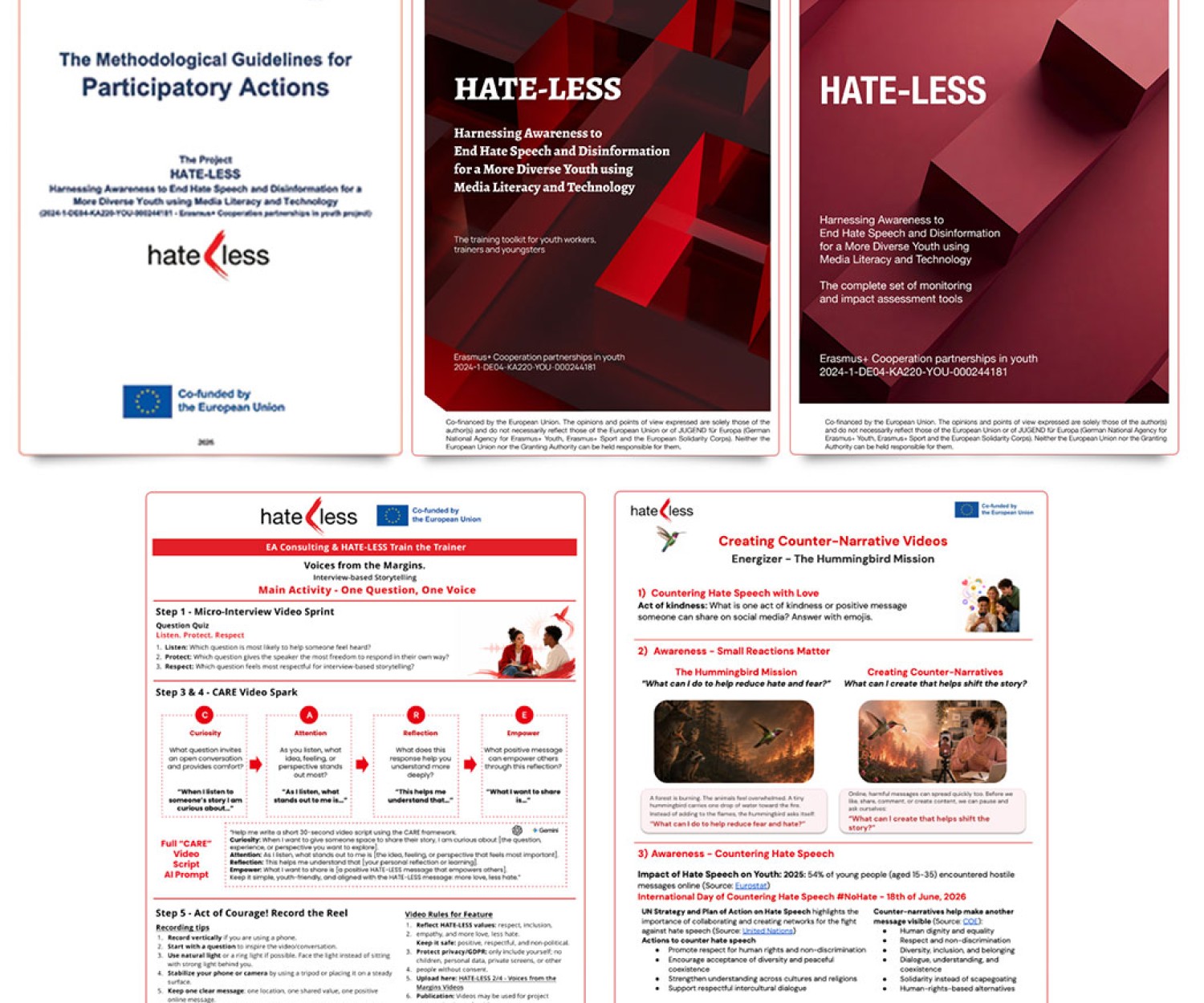
The HATE-LESS Toolkit for Youth Workers and Trainers

Youth workers and educators increasingly face the challenge of addressing hate speech, racism, and disinformation with the young people they support. These issues appear both online and offline, shaping how young people interact with information, media, and each other.


The HATE-LESS Toolkit for Youth Workers and Trainers was developed to support professionals who want to engage young people in meaningful conversations about these challenges while building media literacy and civic engagement skills.


The toolkit provides practical activities and participatory learning methods that encourage young people to reflect, collaborate, and develop their own responses to harmful narratives.


Download the toolkit here:
https://hate-less.eu/wp-content/uploads/2026/03/Hateless-Toolkit.pdf


A Practical Resource for Youth Education


Rather than focusing only on defining hate speech or disinformation, the toolkit takes a practical and action-oriented approach.


It encourages youth workers and trainers to guide participants through activities that strengthen critical thinking, empathy, and digital literacy. Through participatory storytelling and collaborative learning methods, young people are encouraged to analyze online narratives and develop alternative perspectives that promote inclusion and diversity.


The resource is designed to be flexible, allowing educators to adapt activities to the needs of their groups and local contexts.


Six Modules Supporting Participatory Learning


The toolkit is structured around six thematic modules, each focusing on a different aspect of youth engagement and media literacy.


Module 1: Understanding Participants and Shared Values
This module explores group dynamics and introduces discussions about European values, respectful dialogue, and codes of conduct for inclusive learning environments.


Module 2: Emotional Algorithms
Participants explore how social media platforms influence emotions, online behavior, and the spread of radicalizing content.


Module 3: Research and Exploration
This module introduces participatory research activities such as interviews, photo storytelling, soundscape mapping, and youth-led media creation.


Module 4: Foundations of Participatory Action
Young people are encouraged to reflect on their experiences and consider how they can take an active role in addressing harmful narratives in their communities.


Module 5: Creating Participatory Videos
This section provides technical guidance on developing participatory video projects, including storytelling techniques, ethical considerations, and responsible online sharing.


Module 6: Reflection and Learning
Interactive tools and evaluation activities help participants reflect on their learning experiences and discuss the impact of the activities.


From Understanding Hate to Creating Counter-Narratives


One of the key goals of the HATE-LESS toolkit is to move beyond passive learning. Instead of simply identifying harmful narratives, participants are encouraged to create counter-narratives and alternative stories that promote inclusion and respect.


Through digital storytelling, interviews, and collaborative media projects, young people can explore their own perspectives and share experiences that challenge stereotypes and discrimination.


This participatory approach helps young people develop stronger media literacy skills while also building confidence and empathy.


Explore the HATE-LESS Project Results


The toolkit is part of the broader HATE-LESS project, which brings together partners across Europe to strengthen media literacy and civic engagement among young people.


In addition to the training toolkit, the project has also developed methodological guidelines and monitoring tools to support participatory learning initiatives.


Explore all project results:
https://hate-less.eu/results/


Funding Agency: JUGEND für Europa

Learn more about HATE-LESS: https://hate-less.eu

HATE-LESS Project Enters Second Phase – Empowering Youth to Counter Hate Speech through Participatory Media

Following a successful foundation-building period, the Erasmus+ project “HATE-LESS: Harnessing Awareness to End Hate Speech and Disinformation for a More Diverse Youth using Media Literacy and Technology” is proud to announce its transition into its second and most impactful phase.


Project Overview & Objectives


HATE-LESS was launched to address the growing challenges of online hate speech and disinformation that target young Europeans. Our mission is to transform the digital landscape into a safer, more empathetic space by:


  • Combating hate speech and disinformation via media literacy to counter fake news and advocate for diverse migration narratives.
  • Enhancing digital literacy in youth work, empowering youth to critically analyze the content they consume.
  • Mobilizing youth workers and organizations for inclusive societies through participatory methods and technology.
  • Strengthening social and civic competencies by promoting fundamental values, mutual respect, and intercultural dialogue.


From Planning to Action: Implementation & Activities


The first half of the project focused on identifying needs through focus groups with Local Advisory groups and developing a solid academic foundation. We have successfully created Methodological Guidelines and a Practical Toolkit focused on participatory action research and video production. These materials were validated during intensive transnational training sessions and are now ready for wide-scale application.


The HATE-LESS Toolkit: Now Available


A major milestone has been reached with the official publication of the HATE-LESS Practical Toolkit. Now available on our Results Page, this resource offers interactive exercises designed to help educators translate complex media issues into hands-on learning.


A Strong European Partnership


This initiative is driven by a diverse consortium of partners across Europe (excluding FSL for this phase of the campaign):


  1. Germany: EUROPEAN YOUTH4MEDIA NETWORK EV. (Project Coordinator)
  2. Estonia: EESTI PEOPLE TO PEOPLE
  3. France: MITRA FRANCE
  4. Spain: Evolutionary Archetypes Consulting SL
  5. Cyprus: WAVES FOUNDATION FOR GLOBAL EDUCATION


The Road Ahead: Participatory Videos & Youth Manifesto


As we enter the second half of the project, our focus shifts to the roll-out of training schemes and the production of participatory videos. In these videos, young people take the lead as storytellers to share their views on wellbeing and a better digital future.


These creative results will fuel our upcoming Advocacy Campaign and Youth Manifesto, aimed at pushing for the continuous improvement of media literacy in youth work at a policy level. By building a community of informed and responsible media users, HATE-LESS is creating a lasting impact on local, national, and European levels.


Funding Agency: JUGEND für Europa

Learn more about HATE-LESS: https://hate-less.eu

Throwback to Tallinn

Throwback to Tallinn: Less Hate. More Love.


Looking back at our HATE-LESS meeting in Tallinn, one message still resonates clearly: Less Hate. More Love.


The gathering marked an important milestone in the project. It was a space for reflection, exchange, and deeper collaboration around our shared goal: countering hate speech and fostering empathy, critical thinking, and dialogue among young people.


Being in the same room allowed us to test the HATE-LESS toolkit materials.

During the sessions, we explored:

  • The relationship between AI, media, and responsibility
  • The emotional mechanisms behind online engagement
  • The power of narratives and counter-narratives
  • Creative methods, such as participatory video, to amplify youth voices 

The discussions reinforced an important insight: hate speech does not emerge in isolation. It is shaped by algorithms, emotional triggers, repeated messages, and social contexts. Addressing it requires media literacy, emotional awareness, and collaborative action.


Tallinn reminded us that building inclusive digital spaces is a continuous process. It takes commitment, reflection, and creativity. The energy and ideas generated during those days continue to shape our ongoing work within HATE-LESS.


🎥 Watch the recap video:


Funding Agency: JUGEND für Europa

Learn more about HATE-LESS: https://hate-less.eu

Empathy – the Antidote of Hate

Empathy as the Antidote to Hate: What Research Shows


Hate speech online weakens social cohesion, restricts freedom of expression, and undermines democratic values. For young people, especially, repeated exposure to hostility can shape how they see others and how safe they feel expressing themselves.


The HATE-LESS project approaches this challenge with a clear goal: not only to raise awareness of hate speech, but to show what actually helps reduce it. Recent research confirms that empathy plays a decisive role.


Why empathy matters in countering hate


As part of the Stop Hate Speech project, researchers from ETH Zurich and the University of Zurich examined which forms of counterspeech are most effective when responding to hateful content online. Their findings challenge common assumptions.


In a 2021 field experiment involving over 1,300 Twitter (not X) users who had posted hateful messages, different response strategies were tested. The result was consistent and clear: only counterspeech that appealed to empathy for the people targeted by hate speech led to measurable behavior change.


Messages such as “This is very painful for Jewish people” or “Statements like this hurt migrants” were significantly more effective than humor, sarcasm, or warnings about consequences. Appeals that encouraged authors to reflect on the human impact of their words reduced the likelihood that they would continue posting hateful content.


As study lead Dominik Hangartner explains, there is no single solution to online hate, but some approaches demonstrably work better than others.


Empathy also influences bystanders


A follow-up study published in Nature Scientific Reports in 2025 expanded these findings. It showed that empathetic counterspeech not only affects the person being addressed; it also shapes how others react.


Users who were exposed to empathetic counterspeech, even when it was not directed at them, were less likely to like or amplify hateful comments. This reduced the reach and visibility of such content. Counterspeech that invited readers to put themselves in the position of the targeted group was particularly effective.


The researchers observed that messages encouraging perspective-taking helped bystanders draw parallels to their own experiences of exclusion or insult. This shift reduced passive support for hate speech and limited its spread.


From research to practice


These insights are central to the approach of the Public Discourse Foundation and its partners. Counterspeech that promotes empathy and perspective-shifting offers a constructive way to respond to hate without escalating conflict.


For HATE-LESS, this evidence reinforces a key principle: addressing hate is not only about naming what is wrong, but about modelling what works. Empathy is not a soft response; it is a strategic and evidence-based one.


By helping young people understand the emotional impact of words, and by encouraging them to consider how others experience exclusion or harm, we strengthen critical thinking and reduce pathways to radicalization.


Building healthier digital spaces


Empathy reframes the response to harmful behavior. Instead of shaming or threatening, it reconnects speech to its human consequences. Research shows that this approach can change behavior, reduce amplification, and support healthier online environments.


The HATE-LESS project continues to translate these findings into educational tools and communication strategies that support young people, educators, and institutions across Europe.


Because when empathy enters the conversation, hate loses ground.

Source: Source: ETH Zurich & University of Zurich. 2025. Confronting Hate with Empathy for those Affected.

Contact

Project: 2024-1-DE04-KA220-YOU-000244181

Disclaimer: Co-financed by the European Union. The opinions and points of view expressed are solely those of the author(s) and do not necessarily reflect those of the European Union or of JUGEND für Europa (German National Agency for Erasmus+ Youth, Erasmus+ Sport and the European Solidarity Corps).
Neither the European Union nor the Granting Authority can be held responsible for them.

Data Protection Information

Contact
Skip to content