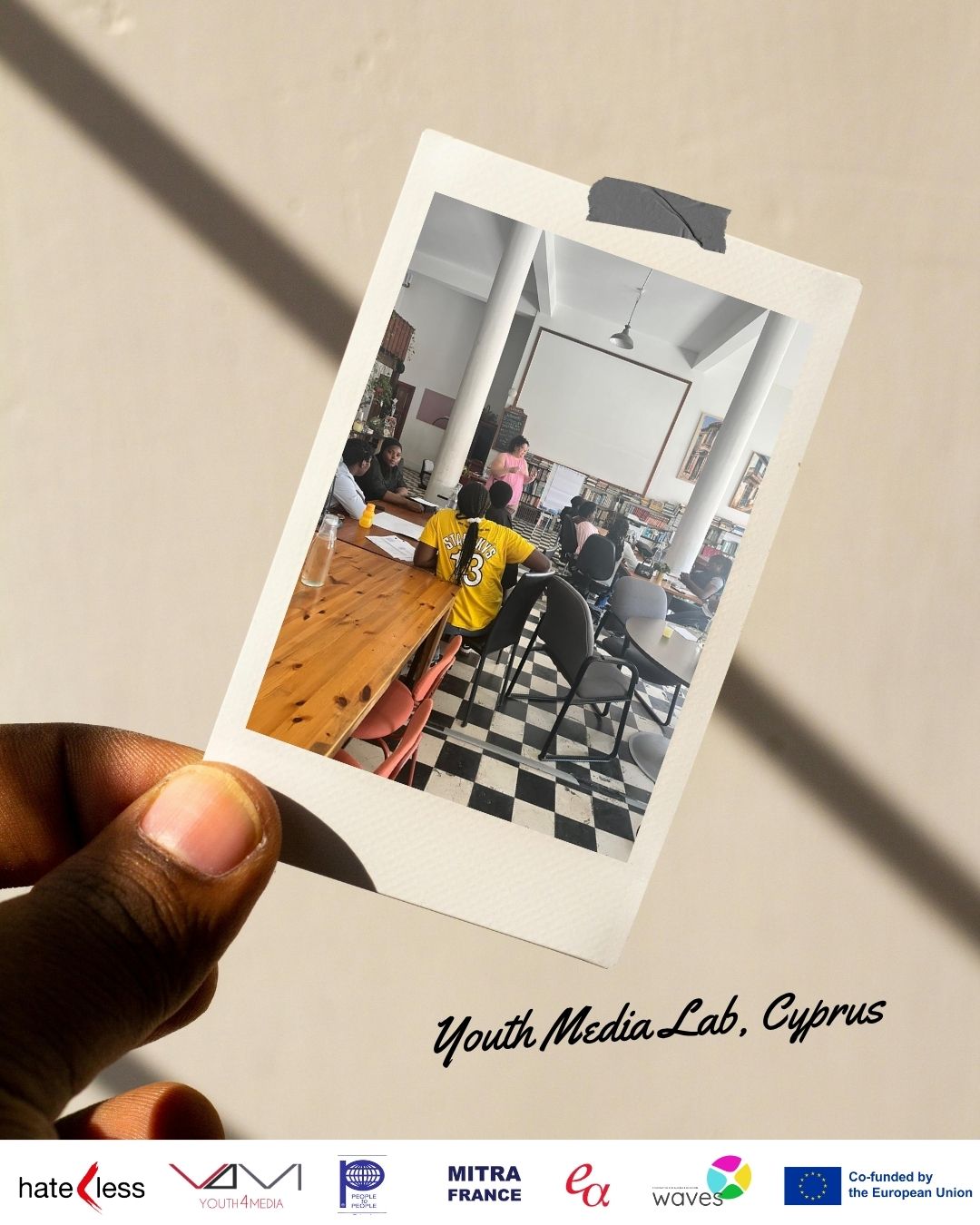
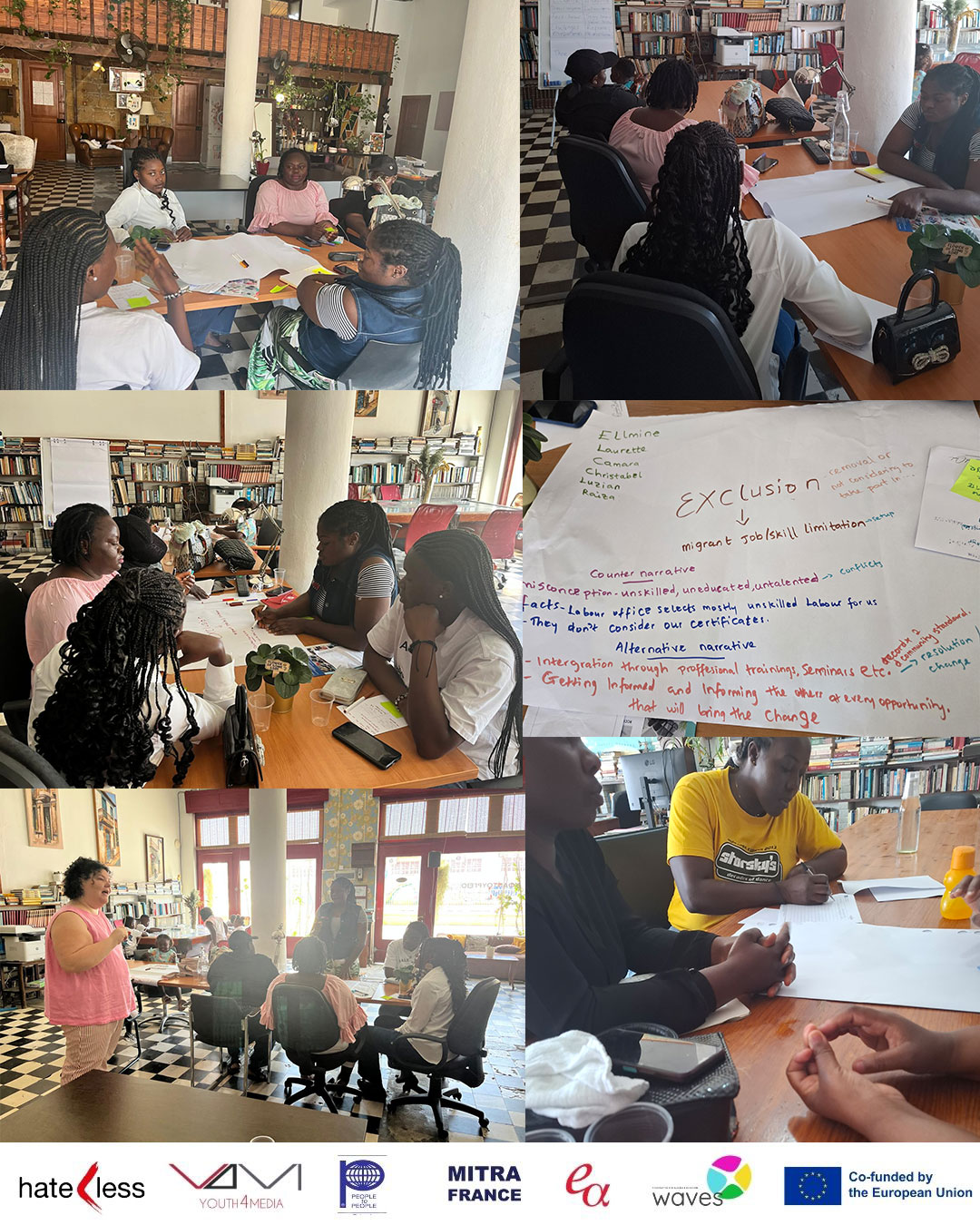
In the third session of our Waves Foundation for Global Education Youth Media Lab series, in Nicosia, Cyprus, young people with migrant backgrounds moved from analysing dominant narratives to building one of their own, using participatory action approaches and the storyboard technique.
There is a particular moment in every meaningful piece of storytelling work when the conversation shifts. It shifts from talking about a problem to talking about what to do about it. From critique to creation, from analysis to authorship.
That moment arrived last week during the third session of the HATE-LESS Youth Media Lab in Nicosia, Cyprus, organised by Waves Foundation for Global Education.
In the second session, a group of young people had spent time unpacking what hate speech is, how narratives are constructed and circulated, and how power shapes whose stories get to be heard. Those conversations were rich, sometimes difficult, and consistently honest. But they were, by design, analytical.
This third session asked something different. It asked participants (a group of young people with migrant backgrounds, who are too often present in public discourse as a topic rather than as authors) to take what they had learned and begin building a counter-narrative of their own.
Starting with a Stance, Not a Technique
Before introducing any specific creative tools, facilitators opened the workshop with a discussion on what participatory action approaches actually mean. The distinction matters. A participatory process is not simply one that involves participants; it is one in which participants set the terms. Research is conducted with communities, not about them. Stories are told by the people who lived them, not on their behalf.
For young people with migrant backgrounds, this stance is particularly significant. The narratives that circulate about migration in European media are frequently produced by people with no first-hand experience of it. Statistics get assigned to faces; faces get assigned to assumptions; assumptions harden into common sense. Participatory approaches are one of the few methodologies that interrupt this cycle at its root; by changing not just the content of the story, but the location of the storyteller.
Introducing the Storyboard
With this foundation in place, the workshop moved into the practical methodology of the day: the storyboard.
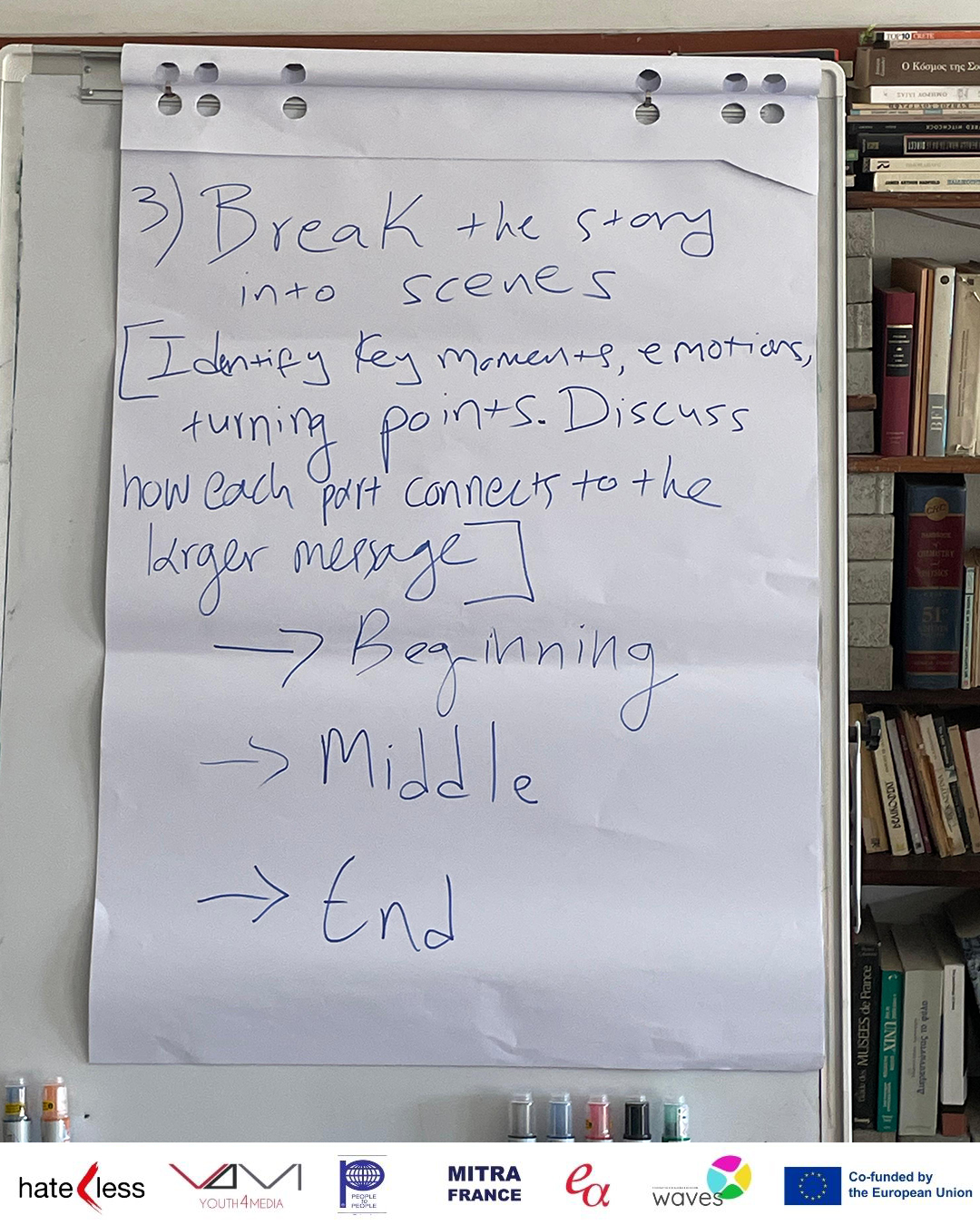
A storyboard is, at its simplest, a sequence of drawings or sketches that map out a visual story panel by panel. But the simplicity of the format is misleading. To create a storyboard, a storyteller has to make a long series of deliberate choices:
- What is the opening image?
- Who appears in the frame?
- Whose voice is heard?
- What is left out?
- Where does the story slow down, and where does it accelerate?
- What do we want the audience to feel by the final panel?
For the participants, this turned out to be the part of the process where the most important conversations happened. The storyboard became a beautifully structured space for the participants to debate not just what the group wanted to communicate, but how, and for whom.
Tools from the HATE-LESS Learning Pack
Throughout the session, facilitators drew directly on concepts and exercises developed within the HATE-LESS methodological guidelines and toolkit, which provides both the conceptual grounding and the practical resources needed to support workshops of this kind. The toolkit’s strength lies in its insistence that participatory video and media literacy education are not a matter of plugging young people into pre-built formats, but of accompanying them through a process of creative decision-making that is genuinely their own.
Process Before Product
It is worth being clear about what this workshop did and did not produce. It did not produce a finished script, a polished pitch, or a release-ready video. What it produced was a set of storyboards, drafts, sketches, and ideas in motion, that represent the beginning of a longer creative process.
That is exactly as it should be. Counter-narrative work is not a slogan generated in an afternoon. It is the slow, collaborative, often uncertain process of choosing what to say, how to say it, and on whose terms. Participants left the session with a clearer sense of the story they want to tell; and, just as importantly, a clearer sense of why they are the ones to tell it.
What Comes Next
The storyboards developed in this workshop will form the basis for the participatory videos that the group will produce in the coming weeks. When those videos are complete, decisions about how, where, and with whom they are shared will be made by the young people themselves.
We will continue to share updates on the journey of this lab and the others now running in Cyprus, as the process unfolds.
HATE-LESS is co-funded by the European Union under the Erasmus+ programme.
Funding Agency: JUGEND für Europa
Learn more about HATE-LESS: https://hate-less.eu