
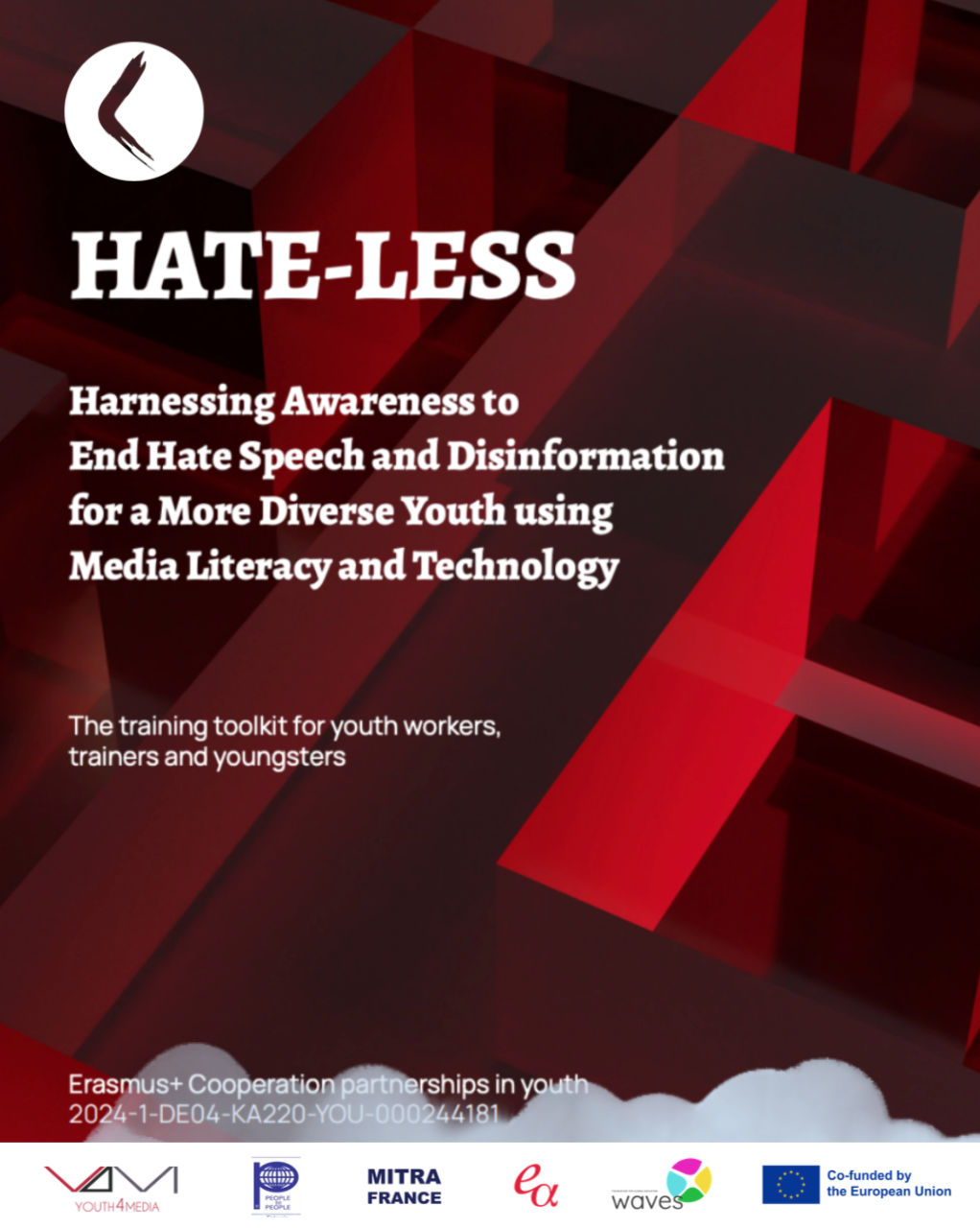
Youth workers and educators increasingly face the challenge of addressing hate speech, racism, and disinformation with the young people they support. These issues appear both online and offline, shaping how young people interact with information, media, and each other.
The HATE-LESS Toolkit for Youth Workers and Trainers was developed to support professionals who want to engage young people in meaningful conversations about these challenges while building media literacy and civic engagement skills.
The toolkit provides practical activities and participatory learning methods that encourage young people to reflect, collaborate, and develop their own responses to harmful narratives.
Download the toolkit here:
https://hate-less.eu/wp-content/uploads/2026/03/Hateless-Toolkit.pdf
A Practical Resource for Youth Education
Rather than focusing only on defining hate speech or disinformation, the toolkit takes a practical and action-oriented approach.
It encourages youth workers and trainers to guide participants through activities that strengthen critical thinking, empathy, and digital literacy. Through participatory storytelling and collaborative learning methods, young people are encouraged to analyze online narratives and develop alternative perspectives that promote inclusion and diversity.
The resource is designed to be flexible, allowing educators to adapt activities to the needs of their groups and local contexts.
Six Modules Supporting Participatory Learning
The toolkit is structured around six thematic modules, each focusing on a different aspect of youth engagement and media literacy.
Module 1: Understanding Participants and Shared Values
This module explores group dynamics and introduces discussions about European values, respectful dialogue, and codes of conduct for inclusive learning environments.
Module 2: Emotional Algorithms
Participants explore how social media platforms influence emotions, online behavior, and the spread of radicalizing content.
Module 3: Research and Exploration
This module introduces participatory research activities such as interviews, photo storytelling, soundscape mapping, and youth-led media creation.
Module 4: Foundations of Participatory Action
Young people are encouraged to reflect on their experiences and consider how they can take an active role in addressing harmful narratives in their communities.
Module 5: Creating Participatory Videos
This section provides technical guidance on developing participatory video projects, including storytelling techniques, ethical considerations, and responsible online sharing.
Module 6: Reflection and Learning
Interactive tools and evaluation activities help participants reflect on their learning experiences and discuss the impact of the activities.
From Understanding Hate to Creating Counter-Narratives
One of the key goals of the HATE-LESS toolkit is to move beyond passive learning. Instead of simply identifying harmful narratives, participants are encouraged to create counter-narratives and alternative stories that promote inclusion and respect.
Through digital storytelling, interviews, and collaborative media projects, young people can explore their own perspectives and share experiences that challenge stereotypes and discrimination.
This participatory approach helps young people develop stronger media literacy skills while also building confidence and empathy.
Explore the HATE-LESS Project Results
The toolkit is part of the broader HATE-LESS project, which brings together partners across Europe to strengthen media literacy and civic engagement among young people.
In addition to the training toolkit, the project has also developed methodological guidelines and monitoring tools to support participatory learning initiatives.
Explore all project results:
https://hate-less.eu/results/
Funding Agency: JUGEND für Europa
Learn more about HATE-LESS: https://hate-less.eu